
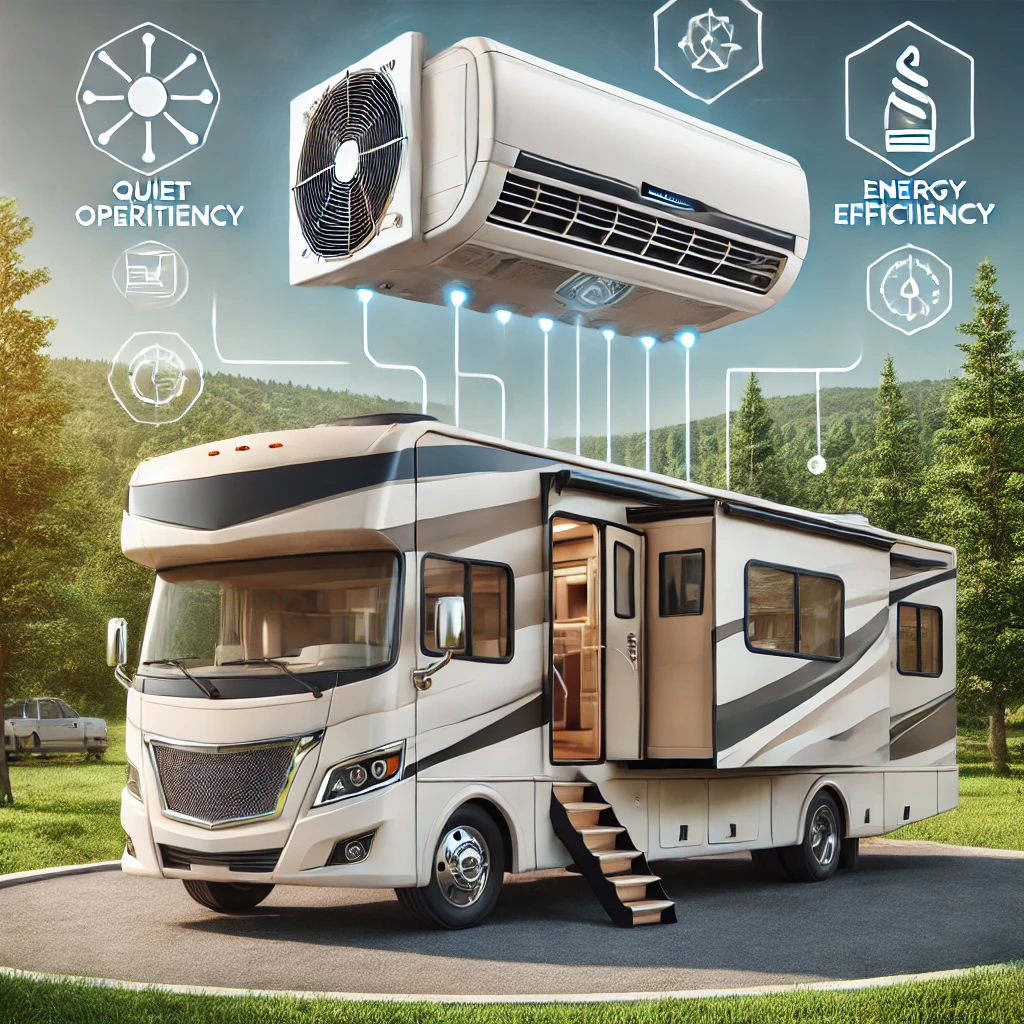
Find Your Perfect RV Air Conditioner with These Essential Tips
Living the RV lifestyle is an adventure, but staying cool during those hot summer months can be a challenge. Selecting the right air conditioner for your RV ensures your home on wheels remains a comfortable haven. Here’s a detailed guide to help you choose the best unit for your needs.
Compatibility: Make Sure Your RV and AC Are a Perfect Match
Tip: Measure twice, buy once. Always double-check the dimensions of your RV’s space and the electrical capacity to ensure the AC unit fits and works properly.
The first step is ensuring compatibility between your RV and the air conditioner. Check the dimensions of the space where you’ll install the unit and confirm it fits. Additionally, make sure your RV’s electrical system can handle the unit’s power requirements without overloading.
Choosing the Right Cooling Capacity for Ultimate Comfort
Tip: Match your BTUs to your RV size and typical travel climate to ensure optimal cooling without overworking your unit.
When it comes to air conditioners, size matters. The cooling capacity, measured in BTUs, should match your RV’s size and the typical climate you’ll be in. Generally, a 13,500 BTU unit is sufficient for smaller RVs, while larger RVs or those in hotter climates might need a 15,000 BTU unit or more.
Silence is Golden: Choose a Quiet RV Air Conditioner
Tip: Look for units with noise reduction features to enjoy peace and quiet on the road.
An often overlooked aspect is the noise level of the unit. Some air conditioners can be quite loud, disrupting your peace. Look for units specifically designed to operate quietly, allowing you to enjoy your travels without the constant hum.
Easy Installation and Minimal Maintenance for Hassle-Free Cooling
Tip: Opt for units known for straightforward installation and low maintenance to save time and effort.
Consider how easy the unit is to install and maintain. Some units are designed for easy DIY installation and have lower maintenance requirements, saving you time and effort. Research units known for their straightforward setup and minimal upkeep.
Warranty and Support: Don’t Get Left in the Heat
Tip: Prioritize units with strong warranties and excellent customer support for added peace of mind.
A solid warranty and reliable customer support are invaluable. Ensure the manufacturer offers a comprehensive warranty and has a good reputation for customer service. This can provide peace of mind if any issues arise.
Enhance Your RV Experience with These Extra Features
Heat Pump: Opt for a unit with a heat pump if you plan to travel in varied climates. This feature allows the unit to provide both heating and cooling.
Non-Ducted vs. Ducted: Decide whether a non-ducted or ducted system suits your RV better. Ducted systems distribute air more evenly and are quieter but are more complex to install.
Regular vs. Low Profile AC Units: Low profile units are more aerodynamic, reducing wind resistance and improving fuel efficiency, although they may offer lower cooling capacity.
Remote Control and Digital Thermostats: These add convenience, letting you adjust the temperature remotely. Some units offer programmable settings for more precise control.
Air Purification: Units with built-in air purifiers can be beneficial if you’re sensitive to allergens or pollutants.
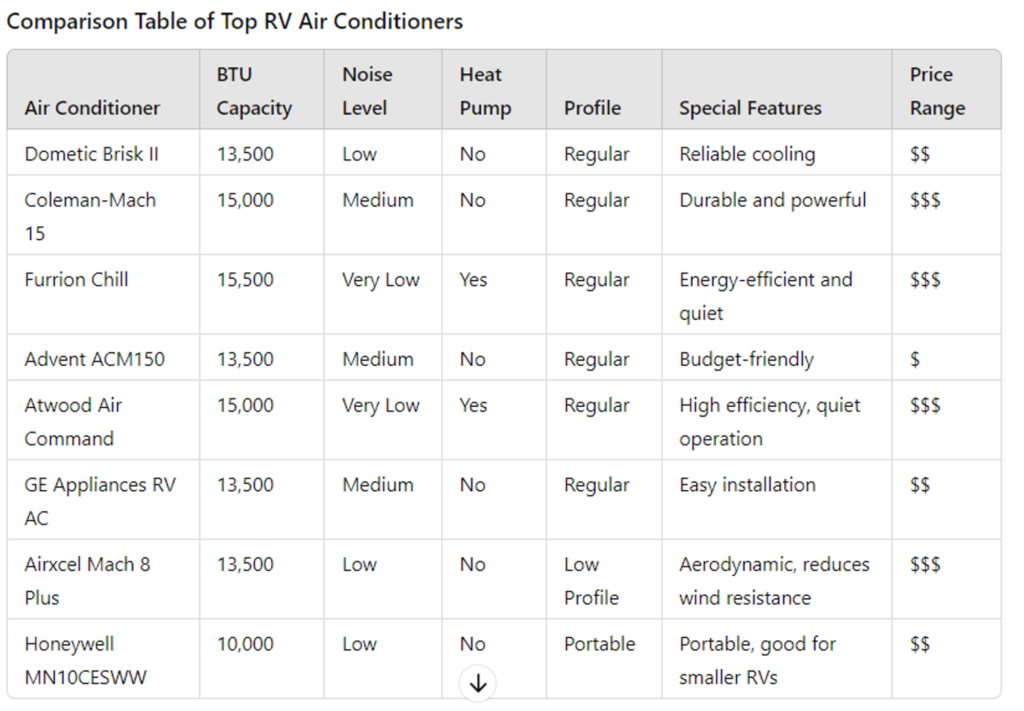
Top 8 RV Air Conditioners to Keep You Cool
Here are eight top-rated RV air conditioners to consider:
- Dometic Brisk II: Renowned for its reliability and cooling power.
- Coleman-Mach 15: Offers 15,000 BTUs of cooling power and exceptional durability.
- Furrion Chill: Noted for quiet operation and energy efficiency.
- Advent ACM150: A budget-friendly option with solid performance.
- Atwood Air Command: Known for high efficiency and quiet operation.
- GE Appliances RV Air Conditioner: Reliable performance with easy installation.
- Airxcel Mach 8 Plus: Features a low profile design with excellent cooling.
- Honeywell MN10CESWW: A portable option with 10,000 BTUs, ideal for smaller RVs.
Comparison Table of Top RV Air Conditioners
Everything About Maintenance & Repair
To ensure your RV air conditioner remains in top condition, regular maintenance and prompt repairs are essential. Here’s what you need to know:
RV Air Conditioner Repair and Troubleshooting Guide
Tip: Regularly inspect your AC unit to catch minor issues before they become major problems.
Common Issues and Fixes:
- Unit Not Cooling: Check for power supply issues, thermostat settings, or clogged filters.
- Strange Noises: Inspect for loose parts or debris in the unit.
- Water Leaks: Ensure proper sealing and check the drainage system.
- When to Call a Professional: If you’re unable to resolve the issue with basic troubleshooting, it might be time to call in an expert to avoid further damage.
How to Quiet Your RV AC (Best Methods)
Tip: Invest in noise reduction accessories to create a more peaceful environment in your RV.
Add Insulation: Insulate the area around the air conditioner to dampen noise.
Use a Vibration Pad: Place a vibration pad under the unit to reduce noise from vibrations.
Check for Loose Parts: Tighten any loose screws or bolts that might be causing noise.
Install a Sound Dampening Kit: These kits are specifically designed to reduce the noise level of your AC unit.
How to Clean an RV Air Conditioner Filter in 5 Easy Steps
Tip: Clean your AC filter regularly to maintain efficient airflow and cooling performance.
- Turn Off the AC: Ensure the unit is powered off before you begin.
- Remove the Filter: Locate and carefully remove the filter from the unit.
- Use a Vacuum to Clean the Filter: Vacuum the filter to remove dust and debris.
- Soak and Scrub the Filter: Use warm soapy water to soak and scrub the filter gently.
- Use a Vinegar Solution to Prevent Bacteria Growth: Rinse the filter with a vinegar solution to kill bacteria.
- Dry the Filter: Allow the filter to dry completely before reinserting it into the unit.
- Reinstall the Filter: Once dry, place the filter back into the unit and secure it.
Does Your RV Air Conditioner Leak When It Rains? Do THIS!
Tip: Regularly check your AC unit’s seals to prevent water damage from leaks.
Common Culprits Causing RV Air Conditioner Leaks When It Rains:
- AC Mounting Bolts and Rubber Gasket: Ensure the bolts are tight and the gasket is in good condition.
- RV Roof Damage: Inspect the roof for cracks or damage that could cause leaks.
How to Fix It: - Check the Seals: Inspect the seals around your AC unit for any gaps or cracks. Replace any damaged seals.
- Ensure Proper Installation: Make sure the unit is installed correctly and is level.
- Use a Protective Cover: When not in use, cover your AC unit to protect it from rain and debris.
Routine Maintenance for Your RV Air Conditioner
Tip: Schedule regular maintenance checks to keep your AC unit running smoothly and efficiently.
Routine Maintenance Tasks: - Clean the Filter: Regularly clean or replace the air filter to maintain airflow.
- Inspect the Unit: Check for any visible signs of wear or damage.
- Check Electrical Connections: Ensure all electrical connections are secure and free from corrosion.
- Test the Thermostat: Verify that the thermostat is functioning correctly.
Replacing an RV Air Conditioner Filter
Tip: Always have a spare filter on hand to quickly replace a dirty or damaged one.
Steps to Replace the Filter:
- Turn Off the AC: Ensure the unit is powered off before replacing the filter.
- Remove the Old Filter: Carefully remove the old filter from the unit.
- Insert the New Filter: Place the new filter into the unit, ensuring it fits securely.
- Power On the AC: Turn the AC back on and check for proper operation.
Choosing the right air conditioner for your RV is crucial for a comfortable travel experience. By considering compatibility, capacity, noise levels, installation, maintenance, warranty, and extra features, you can find a unit that perfectly suits your needs4ocan you create a table for keep tracking the air condition maintenance.
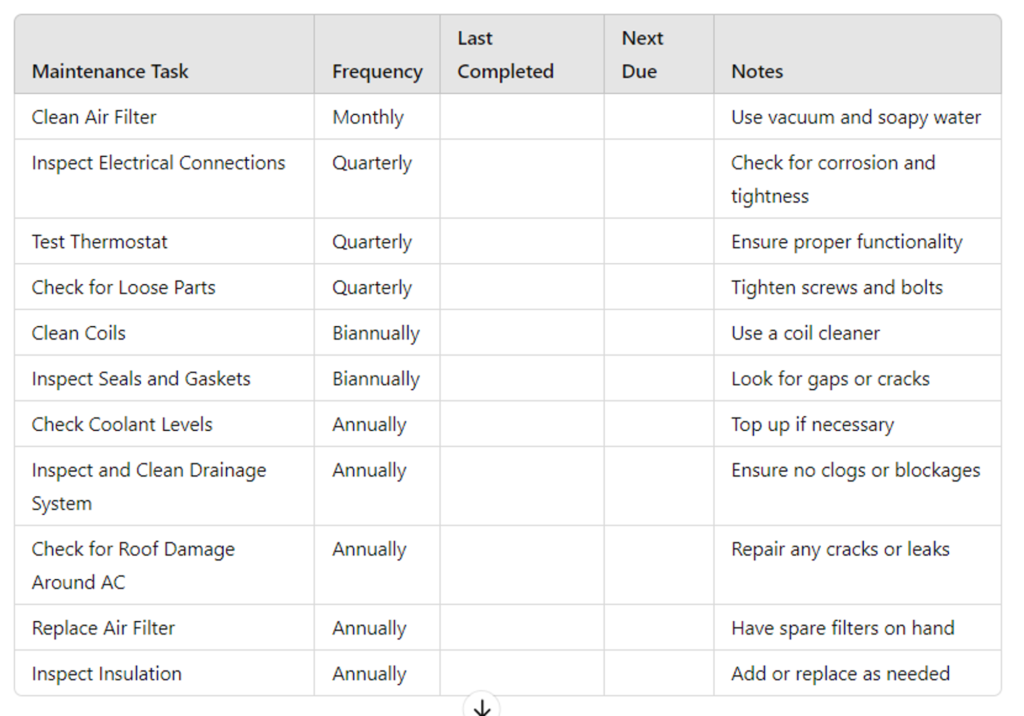
Here is a table to help you keep track of your RV air conditioner maintenance:
Keep track of your RV air conditioner maintenance
Tips for Effective Maintenance Tracking:
- Record Dates: Always note the date you completed each task and calculate the next due date accordingly.
- Set Reminders: Use a calendar or digital reminders to ensure you don’t miss any maintenance tasks.
- Keep Spare Parts: Have spare air filters and other small parts on hand to make replacements quick and easy.
- Document Issues: Note any issues found during maintenance to track recurring problems and potential needs for professional service.
This table will help you stay on top of your RV air conditioner maintenance, ensuring it runs efficiently and reliably throughout your travels.
Our Thoughts
Choosing the right air conditioner for your RV is crucial for a comfortable travel experience. By considering compatibility, capacity, noise levels, installation, maintenance, warranty, and extra features, you can find a unit that perfectly suits your needs and enhances your RV lifestyle.
Maintaining your RV air conditioner through regular cleaning and inspection can prevent many common issues and ensure it runs efficiently. Addressing problems like leaks promptly and keeping spare parts handy will keep your unit in top shape, providing a comfortable environment on all your travels.
If you have any questions or need further assistance, don’t hesitate to reach out. We’re here to help you make the most of your RV adventures!
With love,
Your friends on the road,
Todd & Naty Ross