
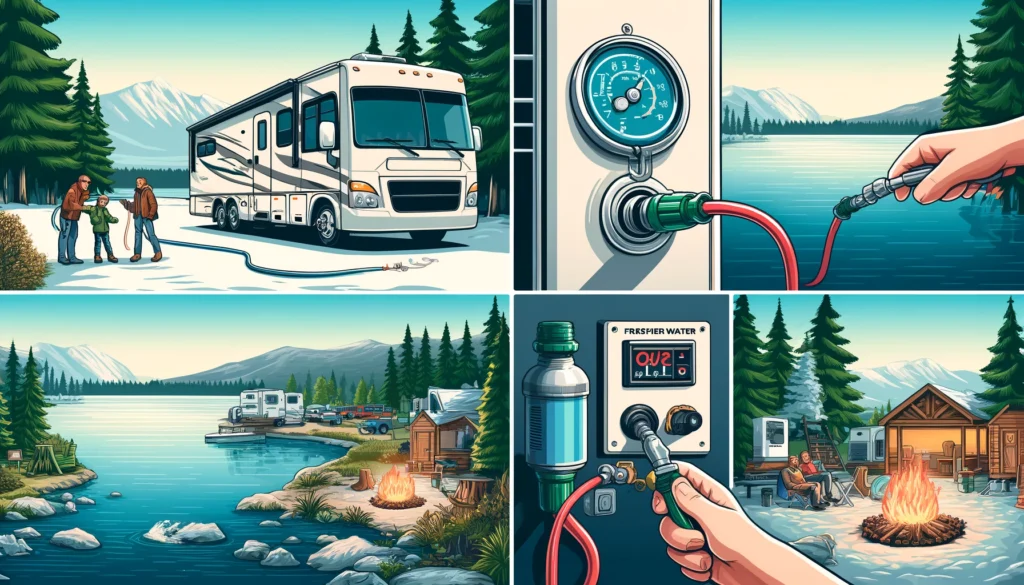
Living the RV lifestyle offers unparalleled freedom, allowing you to explore new horizons while taking the comforts of home with you. One essential aspect of this lifestyle is ensuring you have a reliable source of clean, fresh water. In this comprehensive guide, we’ll cover everything you need to know about your RV’s freshwater system, including the best places to fill your tank, step-by-step instructions for filling it, best practices for water storage, and methods to prevent your water hose from freezing.
1. Top Spots to Fill Your RV Fresh Water Tank: Convenience and Reliability Finding the right place to fill your RV’s freshwater tank can make a significant difference in your journey.
Here are the best options:
Campgrounds and RV Parks
• Pros: Readily available, often included in the cost of your stay, and specifically designed for RV use.
• Cons: May not always be accessible if the campground is full or the station is under maintenance.
• Tip: Look for RV parks that are part of larger chains or associations like KOA for consistent service.
Travel Centers and Truck Stops
• Pros: Convenient locations along major highways, often open 24/7, with services tailored to long-haul travelers.
• Cons: Can be busy, and facilities may vary in quality.
• Tip: Membership programs like Good Sam can offer discounts and access to exclusive services at travel centers.
Public Parks and Recreation Areas
• Pros: Often scenic locations, typically free or low-cost.
• Cons: May have limited hours of operation and variable water quality.
• Tip: Use apps like Campendium or iOverlander to find user-reviewed locations.
Rest Areas and Visitor Centers
• Pros: Easy access from highways, often have clean facilities.
• Cons: Not all rest areas offer water fill-up stations, and those that do may have restrictions.
• Tip: Check state DOT websites for facilities and amenities available at rest areas along your route.
2. The Complete Guide to Filling Your RV Water Tank with Freshwater
Filling your RV’s water tank might seem simple, but following these detailed steps ensures you do it safely and effectively:
Step 1: Locate the Fresh Water Fill Port
• Usually marked clearly and located on the side of your RV.
• Ensure you differentiate it from the sewer and grey water ports to avoid contamination.
Step 2: Use a Clean Water Hose
• Designate a specific hose for potable water use only to prevent cross-contamination.
• Before attaching, flush the hose to clear any debris or stagnant water.
Step 3: Attach the Hose to the Water Source
• Connect one end of the hose to the freshwater spigot, ensuring a tight fit to prevent leaks.
• Use a water pressure regulator if the water source pressure is high to protect your RV’s plumbing.
Step 4: Connect the Hose to the RV
• Securely attach the hose to your RV’s freshwater intake, ensuring it’s tightly connected.
• Check for any leaks before turning on the water.
Step 5: Fill the Tank
• Slowly turn on the water to start filling the tank, monitoring the fill level either via the gauge or by listening for the overflow valve.
• Avoid overfilling, as this can lead to water spillage and potential damage to your RV.
Step 6: Disconnect and Store the Hose
• Once the tank is full, turn off the water, disconnect the hose, and store it in a clean, dry location.
• Cap the freshwater intake port to keep it free from dust and debris.
3. Best Practices for Storing Freshwater in Your RV Tank
Maintaining the quality of your stored water is crucial for health and safety. Here are the best practices:
Regular Refilling and Use
• Aim to use and refill your water tank every one to two weeks to keep the water fresh.
• If not in use, drain the tank completely to prevent stagnant water from becoming a breeding ground for bacteria.
Sanitizing the Tank
• Sanitize your freshwater system every few months. Use a solution of 1/4 cup bleach per gallon of water. • Fill the tank with the bleach solution, run it through all faucets, and let it sit for several hours before flushing with fresh water. Using Water Filters
• Install an inline water filter at the fill point to filter out sediments and contaminants before they enter your tank.
• Consider a more comprehensive filtration system inside your RV for additional purification, especially if traveling to areas with questionable water quality.
4. Top Methods to Prevent Your RV Water Hose from Freezing
Cold weather can pose challenges, but these methods will help keep your water hose functional:
Heated Water Hose
• Pros: Designed to prevent freezing, comes with built-in heating elements.
• Cons: Requires an electrical source, can be more expensive than standard hoses.
• Tip: Ensure the hose is long enough for your typical needs but not so long that it becomes cumbersome. Insulating Your Hose
• Pros: Affordable and effective, using foam pipe insulation and heat tape.
• Cons: Requires careful installation to ensure complete coverage.
• Tip: Wrap the insulated hose in aluminum foil to reflect heat back and further prevent freezing.
Keeping Water Flowing
• Pros: Simple and effective method for preventing freezing.
• Cons: Wastes water and may not be practical in all situations.
• Tip: Use this method in combination with others for the best results during extreme cold.
Proper Hose Storage
• Pros: Prevents damage and prolongs the life of your hose.
• Cons: Requires space inside your RV for storage.
• Tip: Store the hose in a warm place, such as under your bed or in a heated storage compartment.
By following these tips and best practices, you’ll ensure your RV’s freshwater system remains reliable and efficient throughout your travels. Whether you’re filling up at a scenic campground or preventing your hose from freezing in winter, these insights will help you enjoy a seamless RV experience. Safe travels and happy adventuring!
Feel free to reach out if you have any questions or need further assistance. We’re here to help you make the most of your RV journey.
With love,
Your friends on the road,
Todd & Naty Ross
We hope this guide provides you with the information you need to keep your RV’s freshwater system in top shape. Let us know if there are any other RV topics you’d like us to cover. Safe travels!

Apps
De Venezuela a 40 Estados: La Historia Real de Hub365 AI
Como Nacio Hub365 AI: La Historia que Empezo en un